

Hardwood seems like a simple decision from the outside. Pick a wood, pick a color, done. Then someone hands you forty sample boards that all look like “warm oak” and asks whether you want wire-brushed or hand-scraped, and you may find yourself utterly stuck.
The honest truth? You are not alone. It makes perfect sense why this can be confusing, and our team knows exactly how to help.
Start With How You Actually Live
Before we talk about species or stains, we want to know what the floor has to put up with. Two big dogs and a cat? Kids who treat the hallway like a racetrack? Hiking boots coming straight in from the trail? Those answers narrow the field faster than any mood board.
Location matters too. Basements and rooms over concrete need a different approach, and full bathrooms are usually better off with tile that’s built for water. How the floor moves from room to room on your floor plan tells us how much of the house it needs to tie together.
Solid vs. Engineered Hardwood (and Why Seattle Cares)
Solid hardwood is one piece of wood from top to bottom, usually about three-quarters of an inch thick. Engineered hardwood has a top layer of real hardwood glued onto a base of thin wood layers stacked in alternating directions (usually plywood). Once they’re installed, you can’t tell them apart just by looking. The difference lies in how each type responds to moisture, temperature changes, and refinishing.
Wood moves. It swells when the air is damp and shrinks when it dries out, and Seattle gives it plenty of practice between wet winters, furnace-dry indoor air, and summers with the windows open. Engineered flooring’s layered core keeps it more stable through those swings, and it performs better over concrete slabs and radiant heat. That makes it the better pick over carpet or solid hardwood in basements and below-grade rooms, though Seattle basements hold onto a lot of moisture, so we don’t treat any wood as a sure thing down there. It’s also the stronger choice if you want heated floors.
Solid hardwood’s advantage is lifespan. Engineered floors can be refinished too, depending on how thick the top layer is, but solid gives you more chances to sand it down and start fresh. In above-grade rooms over a wood subfloor, it’s still a great choice. The right pick depends on the room, not on which one sounds more “real.”
One more thing about older Seattle homes, because they always seem to hide something. A lot of the Craftsman and mid-century houses we work in have original oak or fir hiding under carpet or vinyl. Sometimes those floors can be refinished, with new boards woven in where walls came out or damage went too deep. Sometimes they can’t. We can usually tell whether there’s wood under there, but how much glue damage or wear it’s carrying stays a mystery until demo. We talk through possibilities like this up front so you know how a surprise could affect your budget or timeline, and it’s one reason a well-built remodel budget always carries a contingency.
Choosing a Wood Species
Your species decides how hard the floor is, how it takes stain, and what the grain looks like. Hardness is measured on the Janka scale, which tests how much force it takes to press a steel ball into the wood. Red oak has a Janka rating of around 1,290 and is the benchmark other species get measured against, while hickory comes in around 1,820. Higher number, fewer dents.
Here are some wood species options:
- White oak is the species we reach for most. It’s a bit harder than red oak (around 1,360 on the Janka scale), its grain is quieter, and it takes stain evenly, so it can go pale, honey-warm, or deep and moody without blotching.
- Red oak has a bolder grain and warmer, pinkish undertones. It’s durable and classic, and it’s often what’s already in older homes, so matching it matters when we’re patching or extending existing floors.
- Hickory is the toughest of the common domestic options, with dramatic light-to-dark variation from board to board. If you love a high-character look and have pets who run laps, it’s worth considering.
- Maple is harder than oak (about 1,450 on the Janka scale) with a smooth, light, tight grain. It reads clean and modern but can be finicky with stain, so it usually looks best close to natural.
- Walnut is the softest of the bunch at a Janka rating of roughly 1,010, and the most luxurious-looking, with rich chocolate tones and gorgeous grain. It shows dents and wear sooner, so we tend to put it in lower-traffic rooms like primary bedrooms and home offices.
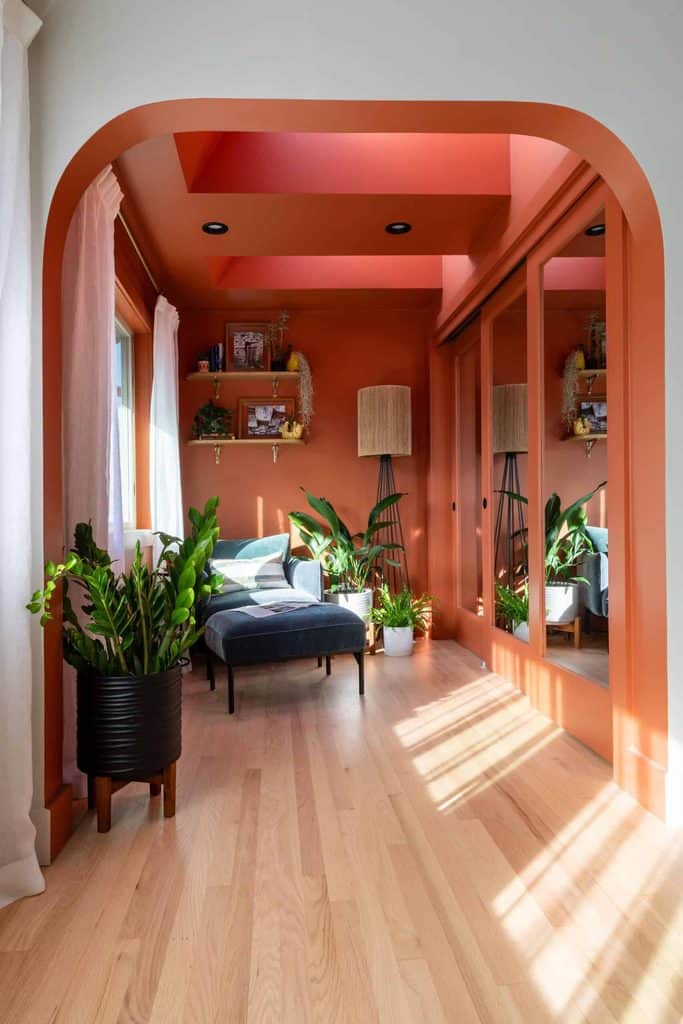
How to Select Hardwood Floor Color and Finish
This is where most people get stuck, and for good reason. Floor color shifts with the light, stain reads differently on every species, and a six-inch sample under showroom lighting tells you very little about 1,200 square feet of living room.
Start with undertones. Every floor leans warm (think yellow, orange, and red) or cool (think gray or ash), and so do your cabinets, countertops, trim, and paint. The floor has to get along with all of them, so we pull flooring samples alongside cabinet finishes and counters and judge them together.
Then look at your light. Seattle gives us a lot of soft gray daylight, which can make warm stains look muddy and cool ones look flat. Bring large samples into the actual room and look at them in the morning and evening before you commit.
Then comes daily life, because color and sheen work as a team here. Very dark floors show dust, pet hair, and every scratch. Very light floors show tracked-in mud. High gloss puts a spotlight on all of it, while matte and satin let it fade into the background. A mid-tone, natural-looking floor with some grain variation and a low sheen is the most forgiving combination there is, which is why so many of our clients with dogs land right there.
The finish itself comes down to upkeep. Polyurethane builds a tough film that wipes clean easily. Hardwax oil soaks in for a softer, more natural look and can be spot-repaired, but it needs refreshing more often. There’s also the question of where the finishing happens. Prefinished boards come sealed from the factory and install faster, and their factory finish is usually tougher than anything applied on site, though it’s harder to recoat later. Site-finished floors are sanded and finished in place, so we can custom-mix stains and match existing floors, which makes them the cleaner choice when new flooring meets old.
How Moxie Helps You Pick (and Install) the Right Floor
Flooring decisions don’t happen in isolation. The floor has to work with your layout, your cabinets, your stairs, your heating, and a subfloor nobody has potentially seen since the 1950s. Because we design and build, the same team picking your species and stain is the one checking moisture levels, leveling that subfloor, and planning the transitions between rooms. That’s built into our design + build process. Want to see how it comes together? Browse our portfolio, and let’s talk about your floors.