
Let’s get one thing out of the way right from the jump. A good renovation isn’t about finding the lowest number. It’s about understanding where your investment is going and making decisions that actually hold up over time. Okay, we said it, now we’ll proceed.
Budgeting for a remodel is less about limiting the project and more about setting it up to succeed. When you know what drives cost and where it makes sense to spend, you end up with a space that works better, lasts longer, and feels worth it every time you walk into it. The goal is not to stretch every dollar as far as possible, but rather, to make sure every dollar is working in the right direction.
What Goes Into a Home Remodel Budget?
Not all parts of a remodel cost the same, and understanding that early makes a big difference in how your budget takes shape.
Layout changes are one of the biggest cost drivers. Moving walls, relocating plumbing, or reworking electrical systems adds complexity fast. That also means it adds up dollars fast. These changes often unlock major improvements in how a space functions, but they also require coordination across multiple trades and more time on site. It’s less about avoiding these changes and more about understanding their impact so they are properly planned for and properly budgeted.
Material choices are another factor that affect your overall cost. Things like natural stone, custom cabinetry, solid wood details, and higher-end fixtures will increase your investment, but they also tend to perform better and last longer. The key is not to use premium materials everywhere, but to use them where they will have the most impact.
Now, that’s all the stuff you can see. Let’s get into everything happening behind the walls. Labor, permits, and the overall condition of your home all play a role. You’ll often experience more unexpected surprises in older homes like outdated wiring, plumbing issues, or structural fixes that need to be handled properly. These aren’t the most exciting parts of a remodel, but they are some of the most important.
Once you understand what is actually driving the cost (with help from a team like ours, of course), your budget becomes something you can shape, not something you’re reacting to.
How to Set Realistic Expectations for Your Remodel
Most people start with a simple question: “What will this cost?” But the better question is, “What do I want this space to do for me?”
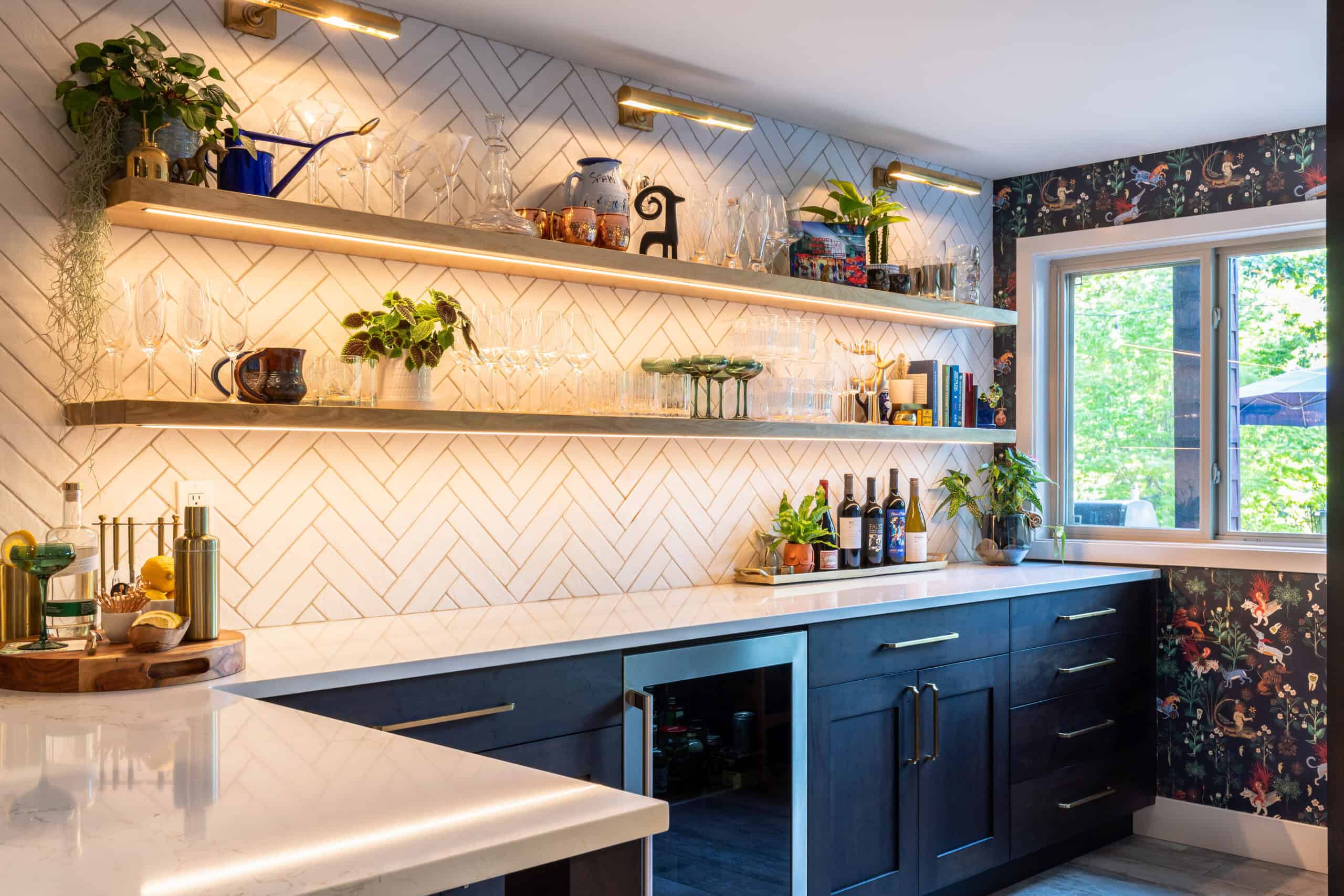
By shifting your focus from your bottom line to your daily experience, you ensure that every dollar spent is an investment in your new lifestyle rather than just a payment for materials. Take your kitchen, for example. A kitchen designed for everyday cooking, hosting, and long-term durability is a very different project than just opening your wallet to update cabinets and some fixtures. It’s the same space, but you’ve invested so much more into making it your home.
It’s also important to understand that remodels are not always predictable. Once walls are opened up, you are working with the reality of your home, not just the plan on paper. That’s why a well-built budget includes a contingency. Not as extra spending money, but as a buffer so you can handle issues the right way without throwing off the entire project.
For us, a successful remodel requires balancing your vision with the reality that quality work takes time. This is especially true when coordinating multiple trades and the finer details of any project. Rushing decisions or skipping important steps often backfires (oh, does it ever!), leading to costly issues and avoidable stress down the road. Setting realistic expectations for your project and your budget means entering it with a clear understanding of the necessary scope, a transparent view of the investment required, and the flexibility to adapt as the process unfolds.
Prioritizing What Matters Most for Your Home Remodel
Everything comes with trade-offs. Your home remodel is no different. But the difference between a project that feels just okay and one that really works to achieve your goals comes down to how those decisions are made.
Start with the parts of your home that affect how you live every day. Think about the layout and flow of your most used spaces, like your kitchen, bathrooms, and living rooms. If a space feels awkward, closed off, or hard to use, no amount of expensive, upgraded finishes will fix that.
From there, think about longevity. Durable materials, well-designed storage, and quality fixtures may not always be the flashiest choices, but they are the ones you will appreciate over time. Soft-close cabinets, smart storage solutions, and surfaces that can handle daily wear all make a bigger difference than they might seem at first.
And finally, there are areas where you can be more flexible. Guest rooms, secondary bathrooms, or spaces you don’t use as often can be designed more simply while still feeling cohesive with the rest of your home.
How Our Team Helps You Stay On Budget
At Moxie Collaborative, budgeting isn’t something we figure out after the design is done; it’s built into our process from the very beginning. No, really, we talk about general budget ranges in our initial Discovery phase. From there, it’s a priority in each subsequent phase to get you the best results based on your vision while respecting your overall budget.
Because we handle both the design and construction, everything stays connected. The same team thinking through your layout, materials, and finishes is also thinking about how it will actually get built, what it will take to execute, and how it fits within your budget. Welcome to the world of design + build.
If you’re thinking about a remodel and want to go into it with clarity instead of guesswork, let’s talk.
All content on this site is produced in accordance with our editorial standards, including our policies on sourcing, accuracy, and corrections.